How To Master Bold Patterns, Textures, And Metals For A Maximalist Home
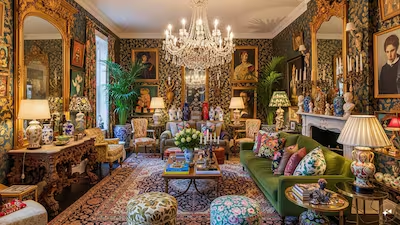


Minimalism had its moment. Now, it’s time for maximalism to take centre stage. This movement celebrates boldness, texture, and personality. In a world tired of blank walls and muted palettes, maximalism is the unapologetic return to visual richness where metallic accents, patterned fabrics, and statement furniture pieces come together to create curated chaos that feels alive. It’s not about clutter; it’s about confidence.
According to Palash Agrawal, Founder Director of Vedas Exports, “The key to creating an exciting maximalist look is to deliberately curate pieces in layers. Start with bold statement metals such as a brass figure or sculpture, and then build with finishes like gold, oxidised silver, and antique bronze.” By clustering pieces in odd numbers and varying heights, he says, you create a rhythm that reflects light and personality. Textured polyresin or matte finishes can help break up metallic intensity, ensuring balance and cohesion.
For Dinesh Chandra Pandey, Founder of Shankar Fenestration Glasses, maximalism is more than an aesthetic; it’s about storytelling. “It’s not chaos; it’s confidence. Every piece has a purpose – the large floral wallpaper, the vintage striped sofa, the brass accessories catching the light, all tell a story,” he says. The modern maximalist, he adds, balances vibrancy with thoughtfulness. It’s about understanding how patterns and materials interact rather than piling them up.
advertisement
“Maximalism isn’t about clutter. It’s about intention,” explains Vikas Gupta, Founder of Three Sixty Leather. His philosophy? Let one hero piece lead. “A deep cognac Chesterfield anchors the room. Pair it with a printed throw or a hand-embossed ottoman, and suddenly there’s a conversation happening between textures.” For him, maximalism is collaboration between materials, not competition.
Designers are embracing black as the new foundation for maximalism. “Black marries drama with intent. It grounds your design while allowing textures, metallics, and patterns to take shape,” says Punam Kalra, Creative Director of I’m The Centre for Applied Arts. She suggests layering rich velvets, brass inlays, and tactile materials like suede or lacquer for visual depth. Thoughtful lighting, she adds, can restore warmth and highlight metallic details.
Echoing this, Anjaleka Kripalani, Founder of Angie Homes, describes black as a dramatic canvas that invites bold experimentation. “Start with statement pieces such as patterned cushions, textured throws, or art-inspired rugs and then balance with solids. Lighting and a consistent colour story are key to keeping the look cohesive and sophisticated,” she explains. Mixing large florals with small geometrics and adding gold or chrome accents creates a harmonious rhythm.
The return of maximalism is not a rebellion. It’s a renaissance. When curated thoughtfully, layered intentionally, and lit with warmth, it transforms spaces into expressive sanctuaries that reflect individuality. Whether through metals, patterns, or bold contrasts, maximalism’s new rule is simple – more is beautiful when done with purpose.